
Edexcel IAL January 2021 P4 (WMA14/01) Q2 Parametric Equation, Differentiation, Volume of Revolutions
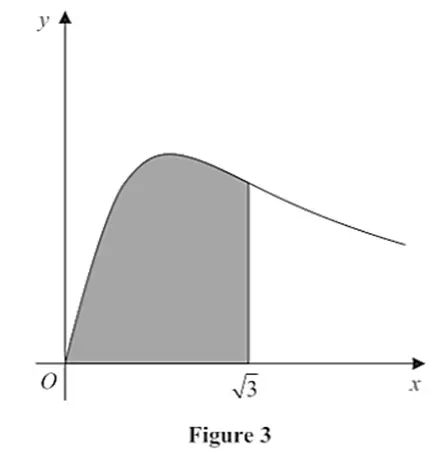
Figure 3 shows a sketch of part of the curve with parametric equations
\( x = \tan \theta \quad y = 2 \sin 2\theta \quad 0 \geq \theta \)
The finite region, shown shaded in Figure 3, is bounded by the curve, the x-axis and the line with equation \( x = \sqrt{3} \). The region is rotated through \( 2\pi \) radians about the x-axis to form a solid of revolution.
(a) Show that the exact volume of this solid of revolution is given by
\( \int_{0}^{k} p(1 – \cos 2\theta) d\theta \)
where \( p \) and \( k \) are constants to be found.
(b) Hence find, by algebraic integration, the exact volume of this solid of revolution.
Solution to part (a): Volume Integral in Terms of \( \theta \)
Key Concepts Used:
- Volume of Revolution for Parametric Curves: \( V = \pi \int y^2 \frac{dx}{d\theta} d\theta \)
- Trigonometric Identities: \( \sin 2\theta = 2\sin\theta \cos\theta, \cos 2\theta = 1 – 2\sin^2\theta \)
Step-by-Step Solution:
-
Given parametric equations:
\( x = \tan\theta, \quad y = 2\sin 2\theta \)
-
Find \( \frac{dx}{d\theta} \):
\( \frac{dx}{d\theta} = \sec^2\theta = \frac{1}{\cos^2\theta} \)
-
Compute \( y^2 \):
\( y^2 = (2\sin 2\theta)^2 = 4\sin^2 2\theta \)
Using \( \sin 2\theta = 2\sin\theta \cos\theta \):
\( y^2 = 4(4\sin^2\theta \cos^2\theta) = 16\sin^2\theta \cos^2\theta \) -
Volume integral:
\( V = \pi \int y^2 \frac{dx}{d\theta} d\theta = \pi \int 16\sin^2\theta \cos^2\theta \cdot \frac{1}{\cos^2\theta} d\theta = 16\pi \int \sin^2\theta d\theta \)
-
Use identity \( \sin^2\theta = \frac{1-\cos 2\theta}{2} \):
\( V = 16\pi \int \frac{1-\cos 2\theta}{2} d\theta = 8\pi \int (1-\cos 2\theta) d\theta \)
-
Determine limits in terms of \( \theta \):
○ The region is bounded by the x-axis and \( x = \sqrt{3} \).
○ On x-axis: \( y = 0 \Rightarrow \sin 2\theta = 0 \Rightarrow \theta = 0 \) (since \( 0 \leq \theta \leq \frac{\pi}{2} \)).
○ At \( x = \sqrt{3} \): \( \tan\theta = \sqrt{3} \Rightarrow \theta = \frac{\pi}{3} \).
○ So, \( \theta \) from \( 0 \) to \( \frac{\pi}{3} \). -
Thus, the volume is:
\( V = 8\pi \int_{0}^{\pi/3} (1 – \cos 2\theta)d\theta \)
Comparing with the given form \( \int_{0}^{k} p (1 – \cos 2\theta)d\theta \), we have:
\( p = 8\pi, \quad k = \frac{\pi}{3} \)
Final Answer:
\( p = 8\pi \) and \( k = \frac{\pi}{3} \)
Solution to part (b): Exact Volume
Key Concepts Used:
- Integration of trigonometric functions: \( \int (1 – \cos 2\theta)d\theta = \theta – \frac{1}{2}\sin 2\theta \)
- Evaluation at limits
Step-by-Step Solution:
-
Integrate:
\( \int_{0}^{\pi/3} (1 – \cos 2\theta)d\theta = \left[ \theta – \frac{1}{2}\sin 2\theta \right]_{0}^{\pi/3} \)
-
Evaluate at \( \theta = \frac{\pi}{3} \):
\( \frac{\pi}{3} – \frac{1}{2}\sin\left(\frac{2\pi}{3}\right) = \frac{\pi}{3} – \frac{1}{2} \cdot \frac{\sqrt{3}}{2} = \frac{\pi}{3} – \frac{\sqrt{3}}{4} \)
-
Evaluate at \( \theta = 0 \):
\( 0 – \frac{1}{2}\sin 0 = 0 \)
-
So, the integral is:
\( \frac{\pi}{3} – \frac{\sqrt{3}}{4} \)
-
Multiply by \( 8\pi \):\( V = 8\pi \left( \frac{\pi}{3} – \frac{\sqrt{3}}{4} \right) = \frac{8\pi^2}{3} – 2\pi\sqrt{3} \)
Final Answer:
\( \frac{8\pi^2}{3} – 2\pi\sqrt{3} \)