
Edexcel IAL October 2021 P4 (WMA14/01) Q8 Parametric Equation, Differentiation, Volume of Revolutions
In this question you must show all stages of your working. Solutions relying on calculator technology are not acceptable.
(a) Find \( \int x^2 \ln x dx \)(3)
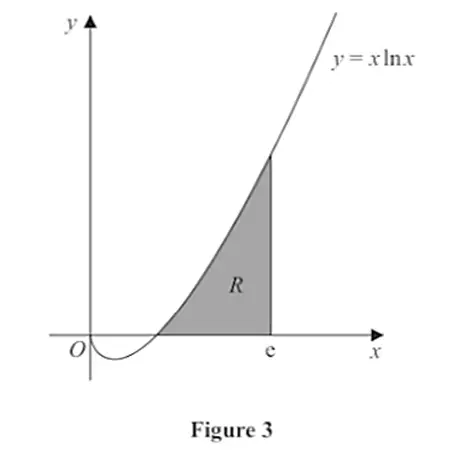
Figure 3 shows a sketch of part of the curve with equation
\( y = x \ln x \quad x > 0 \)
The region \( R \), shown shaded in Figure 3, lies entirely above the \( x \)-axis and is bounded by the curve, the \( x \)-axis and the line with equation \( x = e \). This region is rotated through \( 2\pi \) radians about the \( x \)-axis to form a solid of revolution.
(b) Find the exact volume of the solid formed, giving your answer in simplest form.
(4)
Solution to Part a: Integrate \( \int x^2 \ln x dx \)
Key Concepts Used:
- Integration by Parts: \( \int u dv = uv – \int v du \)
- Choice of \( u \) and \( dv \): Let \( u = \ln x \) (since its derivative simplifies) and \( dv = x^2 dx \)
Step-by-Step Solution:
Let
\( I = \int x^2 \ln x dx \)
Apply integration by parts: Let
\( u = \ln x, \quad dv = x^2 dx \)
(Why choose u = \ln x in part (a)?
The derivative of \ln x is \( \frac{1}{x} \) which simplifies when multiplied by \( v = \frac{x^3}{3} \).)
The derivative of \ln x is \( \frac{1}{x} \) which simplifies when multiplied by \( v = \frac{x^3}{3} \).)
Then
\( du = \frac{1}{x} dx, \quad v = \frac{x^3}{3} \)
So,
\( I = uv – \int v du = \ln x \cdot \frac{x^3}{3} – \int \frac{x^3}{3} \cdot \frac{1}{x} dx = \frac{x^3}{3} \ln x – \frac{1}{3} \int x^2 dx \)
Now integrate \( \int x^2 dx \):
\( \int x^2 dx = \frac{x^3}{3} \)
Thus,
\( I = \frac{x^3}{3} \ln x – \frac{1}{3} \cdot \frac{x^3}{3} + C = \frac{x^3}{3} \ln x – \frac{x^3}{9} + C \)
Final Answer:
\( \frac{x^3}{3} \ln x – \frac{x^3}{9} + C \)
Solution to Part b: Volume of Solid of Revolution
Key Concepts Used:
- Volume of Revolution: \( V = \pi \int_a^b y^2 dx \) for rotation about the x-axis
- Integration by Parts: Will be applied twice due to the form of \( y^2 \)
- Limits of Integration: From \( x = 1 \) to \( x = e \) (since \( y = x \ln x = 0 \) at \( x = 1 \))
Step-by-Step Solution:
-
Given curve:
\( y = x \ln x \)
So,
\( y^2 = (x \ln x)^2 = x^2 (\ln x)^2 \) -
Volume integral:
\( V = \pi \int_1^e y^2 dx = \pi \int_1^e x^2 (\ln x)^2 dx \)
-
Let \( I_1 = \int x^2 (\ln x)^2 dx \). Use integration by parts.
Let
\( u = (\ln x)^2, \quad dv = x^2 dx \)
Then
\( du = 2 \ln x \cdot \frac{1}{x} dx = \frac{2 \ln x}{x} dx, \quad v = \frac{x^3}{3} \)
So,
\( I_1 = \frac{x^3}{3} (\ln x)^2 – \int \frac{x^3}{3} \cdot \frac{2 \ln x}{x} dx = \frac{x^3}{3} (\ln x)^2 – \frac{2}{3} \int x^2 \ln x dx \) -
From part (a), \( \int x^2 \ln x dx = \frac{x^3}{3} \ln x – \frac{x^3}{9} \)
So,
\( I_1 = \frac{x^3}{3} (\ln x)^2 – \frac{2}{3} \left( \frac{x^3}{3} \ln x – \frac{x^3}{9} \right) + C \)
\( = \frac{x^3}{3} (\ln x)^2 – \frac{2x^3}{9} \ln x + \frac{2x^3}{27} + C \) -
Now evaluate definite integral from 1 to e:
\( \int_{1}^{e} x^2 (\ln x)^2 dx = \left[ \frac{x^3}{3} (\ln x)^2 – \frac{2x^3}{9} \ln x + \frac{2x^3}{27} \right]_{1}^{e} \)
-
At \( x = e \):
\( \ln e = 1 \), \( e^3 \) remains
So,
\( \frac{e^3}{3} (1)^2 – \frac{2e^3}{9} (1) + \frac{2e^3}{27} = \frac{e^3}{3} – \frac{2e^3}{9} + \frac{2e^3}{27} \)
Find common denominator (27):
\( = \frac{9e^3}{27} – \frac{6e^3}{27} + \frac{2e^3}{27} = \frac{5e^3}{27} \) -
At \( x = 1 \):
\( \ln 1 = 0 \), \( 1^3 = 1 \)
So,
\( \frac{1}{3} (0) – \frac{2}{9} (0) + \frac{2}{27} = \frac{2}{27} \) -
Therefore,
\( \int_{1}^{e} x^2 (\ln x)^2 dx = \frac{5e^3}{27} – \frac{2}{27} = \frac{5e^3 – 2}{27} \)
-
Volume:
\( V = \pi \cdot \frac{5e^3 – 2}{27} = \frac{\pi}{27} (5e^3 – 2) \)
Final Answer:
\( \frac{\pi}{27} (5e^3 – 2) \)