
Edexcel IAL January 2023 P4 (WMA14/01) Q3 Parametric Equation, Differentiation, Volume of Revolutions
In this question you must show all stages of your working.
Solutions relying entirely on calculator technology are not acceptable.
Solutions relying entirely on calculator technology are not acceptable.
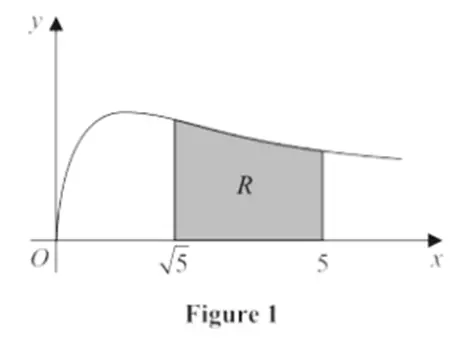
Figure 1 shows a sketch of the curve with equation
\[y = \sqrt{\frac{3x}{3x^2 + 5}} \quad x \geq 0\]
The finite region \( R \), shown shaded in Figure 1, is bounded by the curve, the \( x \)-axis and the lines with equations \( x = \sqrt{5} \) and \( x=5 \)
The region \( R \) is rotated through \( 360^\circ \) about the \( x \)-axis.
Use integration to find the exact volume of the solid generated. Give your answer in the form \( a \ln b \), where \( a \) is an irrational number and \( b \) is a prime number.
(5)
(5)
Solution: Volume of Solid of Revolution
Key Concepts Used:
- Volume of Revolution: The volume \( V \) when a curve \( y = f(x) \) is rotated about the \( x \)-axis from \( x = a \) to \( x = b \) is given by
- Substitution Method: To simplify the integral, use a substitution that matches the denominator.
- Logarithmic Integration: The integral of \(\frac{1}{u}\) is \(\ln|u|\).
Step-by-Step Solution:
1. Set Up the Volume Integral
The curve is
\[y = \sqrt{\frac{3x}{3x^2 + 5}}\]
Squaring both sides gives
\[y^2 = \frac{3x}{3x^2 + 5}\]
The volume is
\[V = \pi \int_{\sqrt{5}}^{5} y^2 dx = \pi \int_{\sqrt{5}}^{5} \frac{3x}{3x^2 + 5} dx\]
2. Choose a Substitution
Let
\[u = 3x^2 + 5\]
(Why choose \( u = 3x^2 + 5 \)?
The denominator is \( 3x^2 + 5 \), and its derivative is \( 6x \), which cancels with the \( x \) in the numerator. This substitution simplifies the integral.)
Then,
\[\frac{du}{dx} = 6x \Rightarrow dx = \frac{du}{6x}\]
3. Change the Limits of Integration
* When \( x = \sqrt{5} \):
\[u = 3(\sqrt{5})^2 + 5 = 3 \cdot 5 + 5 = 15 + 5 = 20\]
* When \( x = 5 \):
\[u = 3(5)^2 + 5 = 3 \cdot 25 + 5 = 75 + 5 = 80\]
4. Rewrite the Integral in Terms of u
Substitute into the integral:
\[V = \pi \int_{x=\sqrt{5}}^{x=5} \frac{3x}{u} \cdot \frac{du}{6x} = \pi \int_{u=20}^{u=80} \frac{3x}{u} \cdot \frac{1}{6x} du\]
The x terms cancel:
\[V = \pi \int_{20}^{80} \frac{3}{6} \cdot \frac{1}{u} du = \pi \int_{20}^{80} \frac{1}{2u} du\]
5. Integrate with Respect to u
\[V = \frac{\pi}{2} \int_{20}^{80} \frac{1}{u} du = \frac{\pi}{2} [\ln|u|]_{20}^{80}\]
6. Evaluate the Definite Integral
\[V = \frac{\pi}{2} (\ln 80 – \ln 20) = \frac{\pi}{2} \ln \left( \frac{80}{20} \right) = \frac{\pi}{2} \ln 4\]
7. Simplify the Expression
Since \( \ln 4 = \ln(2^2) = 2\ln 2 \), we have
\[V = \frac{\pi}{2} \cdot 2\ln 2 = \pi \ln 2\]
(Why is \( \ln 4 = 2\ln 2 \)?
This is a logarithmic identity: \( \ln(a^b) = b\ln a \).)
Final Answer:
\[\pi \ln 2\]
Here, \( a = \pi \) (an irrational number) and \( b = 2 \) (a prime number).